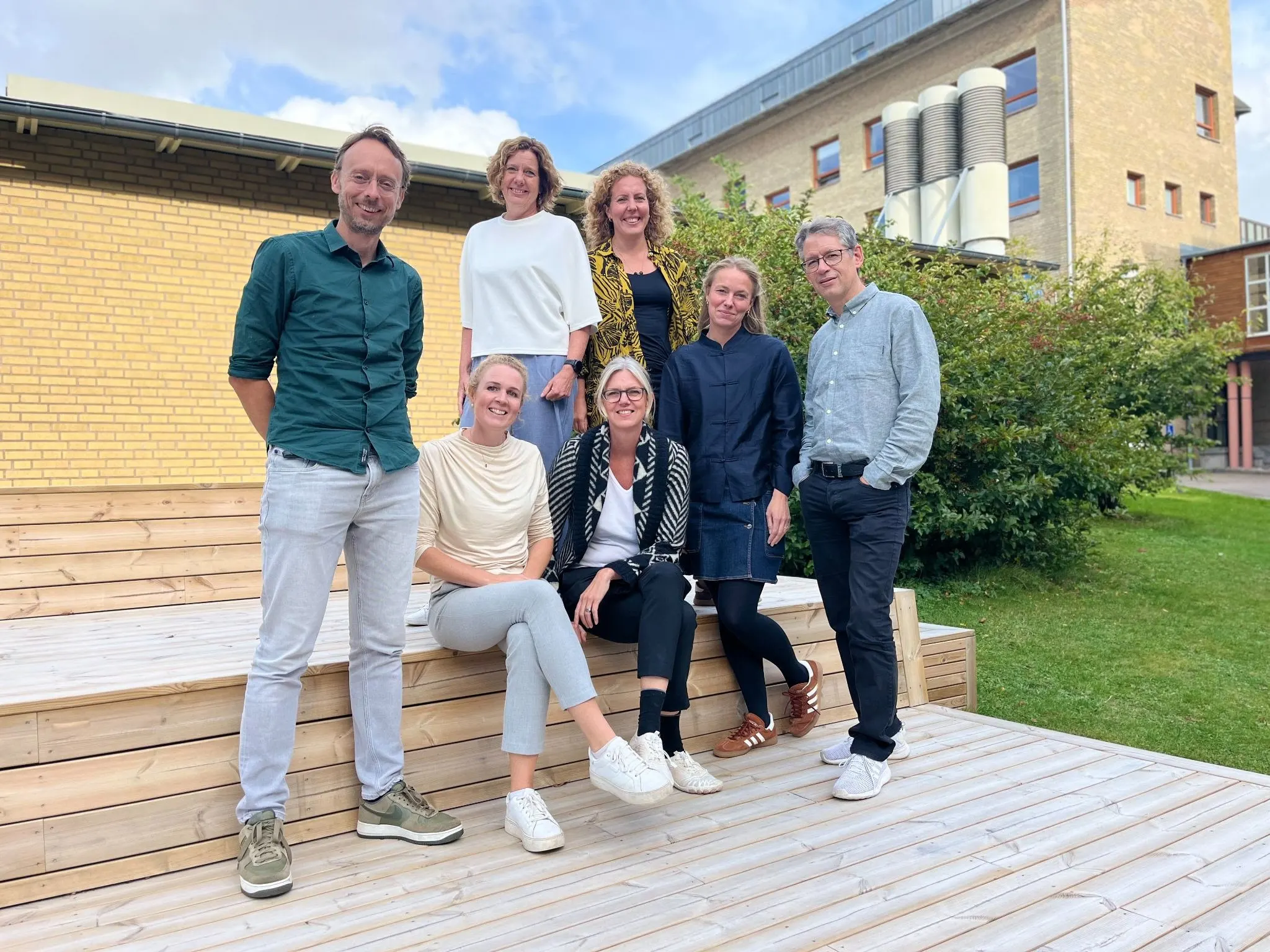
Airbridge is an Amsterdam-based venture capital firm investing in scalable European technology companies. The team consists of former entrepreneurs and invests from its second fund of €63 million, typically writing initial tickets of €1 million to €5 million into companies with clear commercial traction
The fund focuses on emerging tech leaders across Europe and works closely with founders in a hands-on, pragmatic way, supporting them in scaling their businesses and preparing for follow-on rounds or strategic exits. Several portfolio companies have attracted capital from large international investors or were acquired by strategic buyers such as Cisco and GoDaddy.
What differentiates Airbridge is its entrepreneurial background, small and highly involved team, and a strong focus on companies that combine solid growth with disciplined economics rather than growth at any cost.
The firm’s co-founder and Managing Partner, Rick van Boekel told Vestbee more about its strategy and investment approach.
Fund strategy overview
Geography: Europe, with a focus on Benelux, DACH, Scandinavia, and the UK/Ireland
Preferred industries: scalable software companies – emerging tech leaders with commercial traction
Investment ticket: €1–5M
Company stage: seed up to Series A
Product type: technology products, typically software or tech-enabled platforms
Product stage: post-launch with proven market fit
Revenues: ARR of €500-600k and impressive growth
Q&A with Rick van Boekel, co-founder and Managing Partner at Airbridge Equity Partners
What are the 5 main things you look for in a startup?
- Real commercial traction
We are not in the business of funding PowerPoint slides with inspirational taglines. We typically invest once a company has meaningful revenue and proof that customers actually pay for the product. The difference between “strong pipeline” and “money in the bank” is usually about twelve months of reality.
- A big market, shifting, or broken
Most of our investments sit in sectors where technology is rewriting the rules: AI-driven workflows, vertical SaaS, sales automation, commerce infrastructure, and data platforms. We prefer markets where incumbents are slow, and margins are still fat enough to attack. If the category already has ten unicorns and zero profits, we get cautious.
- A product that solves a painful, repeatable problem
We look for solutions that customers need every day, not once a year when budgets are flush. The best companies in our portfolio tend to sit directly on revenue, cost savings, or compliance. If the product disappears tomorrow and nobody really notices — that is a red flag.
- Founders who combine ambition with execution discipline
We like founders who want to build large companies but also understand unit economics, hiring mistakes, and that growth is something you engineer, not just hope for. Charisma helps with fundraising, but operational clarity creates returns.
- A credible path to scalable growth
We invest in companies that can realistically scale across markets, not just dominate one local niche. That usually means a repeatable sales motion, strong gross margins, and a product that does not require an army of consultants to deploy. If while scaling the company also scales the chaos, it is not venture scale.
What disqualifies a startup as your potential investment target?
- High burn with limited growth
Spending heavily without clear, proportional revenue growth is a hard no. Capital should accelerate momentum, not compensate for its absence.
- Lack of product market fit
Low retention, slow expansion, or constantly shifting positioning usually indicates the core problem is not being addressed well enough.
- Market too small or overcrowded
If the total opportunity is limited, or ten similar players chase the same niche, the odds of building a venture-scale outcome are low.
- Story-driven instead of metric-driven founders
We avoid companies where the narrative is strong, but the numbers are weak or inconsistent. Execution beats storytelling.
- Non-scalable or services-heavy model
If revenue growth requires proportional headcount growth, margins stay under pressure, and the venture case becomes very thin.
What, in your opinion, differentiates the best founders from the rest?
In our experience, the best founders combine a strong, long-term vision with a very concrete understanding of their customers and business fundamentals. They know exactly which problem they are solving, for whom, and why those customers are willing to pay for it. You rarely see them chasing trends or constantly repositioning the company. There is a clear direction, and every product, hiring, and go-to-market decision supports it.
What also stands out is execution discipline. The strongest founders are not only good storytellers, but they also know their numbers in detail. They understand unit economics, sales efficiency, churn, and margins, and they use those metrics to steer the company. When growth slows, they do not blame the market or the investors; they adjust the model and fix the underlying issue
What startups should take into account before making a deal with a VC fund?
Before taking venture capital, founders should be clear about the journey they are choosing. VC funding comes with expectations of rapid, scalable growth and a meaningful exit. It shapes strategy, hiring, product decisions, and governance. If the goal is to build a steady, profitable business with full control, venture capital is usually not the right fit. Founders should also look beyond valuation and carefully choose their investors. A VC becomes a long-term partner with influence over major decisions, so alignment on strategy, pace, and expectations is critical.
What is your approach to startup valuation and preferred share in the company?
Our starting point for valuation is the core SaaS fundamentals: ARR, growth rate, gross margin, net revenue retention, churn, and the CAC-to-LTV ratio. ARR and growth typically drive the multiple, while margins, retention, churn, and sales efficiency indicate how durable and scalable that growth is. In cases where there is a gap between founder and investor expectations, we may use performance-based mechanisms such as milestones or valuation adjustments, but we generally prefer to agree on a clean valuation that both sides consider fair.
At signing, we typically target an ownership stake of 15% to 25%, providing sufficient alignment and influence to actively support the company while keeping founders strongly incentivized.
How do you support your portfolio companies?
We support our portfolio companies in a hands-on, responsive way. We run a small team, so founders work directly with the partners and get quick, practical input when it matters. We are always on, easy to reach, and highly involved, especially around strategy, hiring, and follow-on funding.
At the same time, we never try to take the driver’s seat. The company is led by the founders. Our role is to question decisions in a smart, constructive way and to serve as a sounding board, not as operators. The goal is simple: be responsive, stay close to the company, and add value where it matters most.
What are the best-performing companies in your portfolio?
We generally prefer not to single out specific companies because performance tends to evolve, and we see our role as long-term partners across the whole portfolio. What we can say is that the best-performing companies are usually those that do not create too many surprises, positive or negative. Extreme swings in either direction often point to a lack of control, weak forecasting, or an unstable growth engine.
The strongest performers typically show solid, consistent growth with a normal, disciplined burn rate. That balance is usually supported by healthy underlying metrics, especially low churn and high net revenue retention. When those fundamentals are in place, growth tends to be more predictable, and the company is in a much better position to build a durable, scalable business.
What are your notable lessons learned from investments that didn’t work out as expected?
One of the main lessons is that the first encounter with a founder and the core team is often a strong indicator of how the company will develop. The founders who perform best are usually realistic, open to feedback, determined, motivated, and truly knowledgeable about their market and customers.
We have learned to be cautious when meetings are dominated by chest-beating, narcissistic behavior, and hockey-stick projections that ignore basic unit economics. In practice, character and realism are much better predictors of success than an overly polished pitch deck.
What are the hottest markets you currently look at as VC, and where do you see the biggest hype?
At the moment, three areas stand out: where we see real demand, structural market shifts, and increasing customer budget allocation.
The first is cybersecurity, especially solutions that address new vulnerabilities created by cloud architectures, distributed workforces, and AI-driven attacks. As more business-critical processes move online, security is no longer a discretionary spend. It is becoming part of the core infrastructure stack, which makes it a structurally strong market.
The second is IP fraud detection and digital content protection. With the explosion of generative AI, the amount of copied, manipulated, or unauthorized content is increasing rapidly. Companies that help protect brands, creators, and enterprises against IP theft, impersonation, and automated fraud are entering a market that is growing both in size and urgency.
The third area is what we broadly call AI risk and control layers. The AI wave is creating enormous opportunities, but also new categories of risk around compliance, hallucinations, data leakage, decision-making, and accountability. Startups that provide monitoring, governance, and operational control around AI systems are becoming increasingly relevant as enterprises move from experimentation to real deployment.
In terms of hype, we still see significant excitement around horizontal AI tools and generic copilots. Many of those markets are getting crowded quickly, with limited differentiation and strong platform risk from large incumbents. The more durable opportunities tend to sit in vertical applications, infrastructure, and risk management layers around AI, where the problems are harder, the switching costs are higher, and the budgets are more structural.
In your view, what are the key trends that will shape the European VC scene in the coming years?
The European VC scene is becoming more disciplined and more specialized. The growth-at-any-cost era is largely over, and investors are again focusing on fundamentals such as ARR quality, margins, retention, and capital efficiency. Pitch decks still matter, but the spreadsheet is back in charge.
AI will dominate investment agendas, but the real opportunities will sit in vertical applications and risk-related layers, not in the tenth generic copilot for the same workflow. Many companies will claim to use AI, but only a small group will actually build defensible, valuable businesses around it.
We also see more pragmatic deal structures, milestone-based rounds, and realistic valuations. After a period of easy capital and optimistic hockey sticks, both founders and investors are rediscovering the importance of discipline. In the end, the companies with strong growth, normal burn, and healthy retention will win, which is less glamorous but usually far more profitable.