Open most European founders' expansion plans, and the North America slide has one flag on it. New York for enterprise sales. San Francisco for capital. Austin if the budget is tight. Canada, if it shows up at all, is a footnote for year three.
That leaves a lot on the table. The US is the biggest prize on the continent, and nobody's arguing otherwise. But Canada belongs on the same slide: a trade agreement already in force, deep technical talent, a venture market wired into US capital, and buyers who will actually take the meeting. For many founders, it's also the friendlier market to test in, adjust, and win.
European founders are already finding this out. Here's what they found, and why Canada deserves a place in your plan.

Buyers who take the meeting
Canada is a G7 economy of nearly 42 million people. That's far smaller than the US, which is the point. The buyers are concentrated: a handful of large banks and insurers, telecoms, energy and mining companies, and three levels of government that buy technology.
That concentration helps when you're new to a continent. In a single week you can meet a real share of a sector's decision-makers, test your pitch on them, and come away knowing what to change. That's useful wherever you go next.
What European founders found
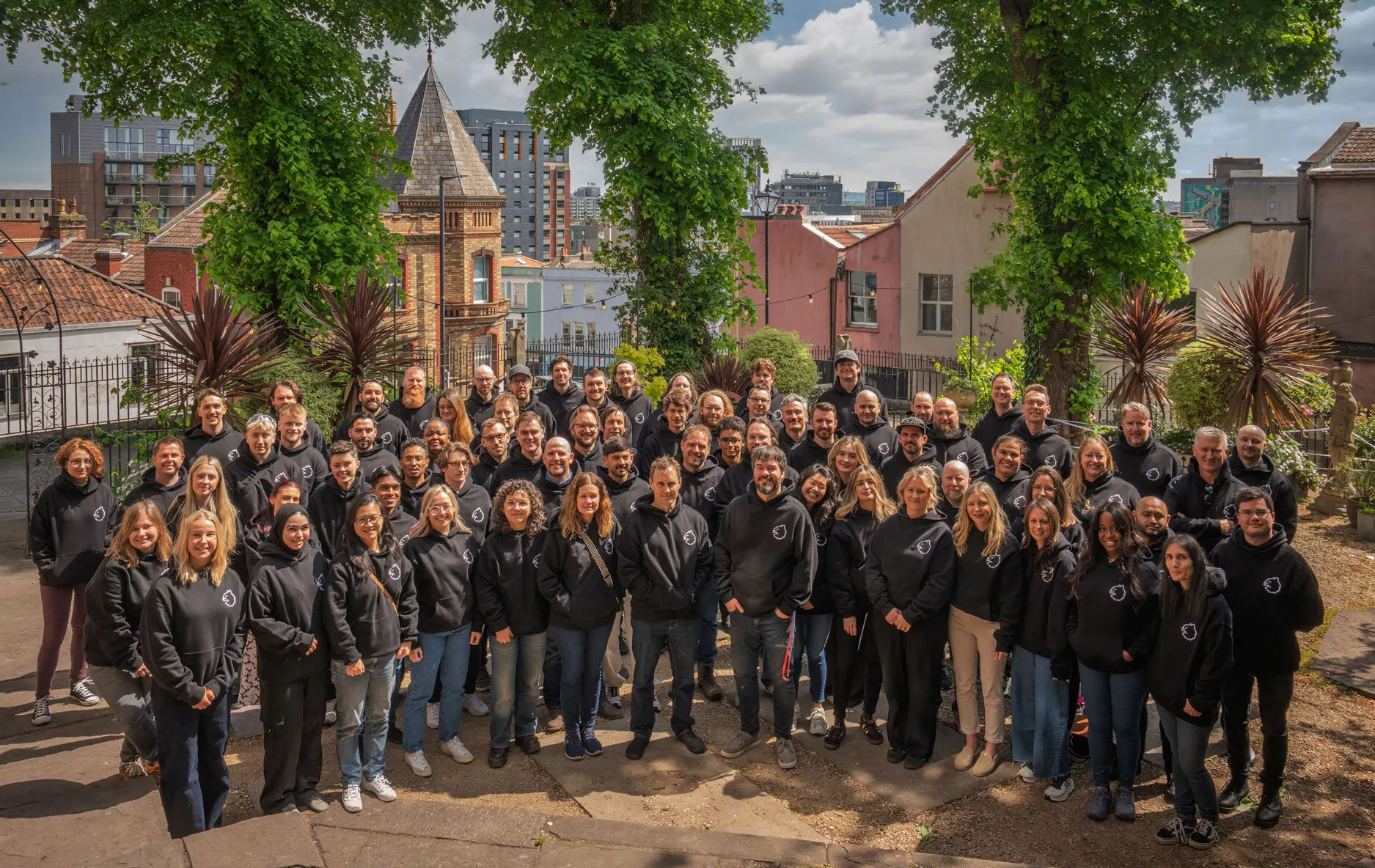
Authologic (Warsaw) sells identity verification to regulated businesses in fintech, banking and betting. It looked at Canada because the market is moving to digital ID, and because Canada and the EU signed a memorandum of understanding on digital credentials in December 2025. Through TBDC's Horizon program, the team mapped the opportunity first, then came to Toronto for Sprint Week to meet potential customers and partners. Product marketer Bartek Kuban said the program "basically compressed a year of business development into a single week."
Proteine Resources turns mushroom byproducts into protein for pet food, which means selling to two industries at once: mushroom growers on one side, pet food makers on the other. At Sprint Week in December 2025, co-CEO Bart Roszkowski met both. "I was connected to six mushroom producers just by being in the program," he said. His point was that a warm introduction builds trust in a way a cold call doesn't.
Neither story is about a big Canadian contract on day one. Both are about getting in front of the right people quickly, in a market small enough to reach them.
A trade deal worth reading
EU companies already have preferential access to Canada. CETA, the EU–Canada trade agreement, has been provisionally applied since 21 September 2017 and removed duties on about 98% of tariff lines traded between the two.
For a tech company, tariffs are the least interesting part. Two things matter more.
- Public procurement. CETA gave EU companies the best access Canada had ever offered foreign bidders on public contracts, at provincial and municipal level as well as federal. If you sell to governments, utilities or public health systems, the door is already open.
- Services. CETA opened Canadian markets to EU service suppliers in sectors including financial services, telecoms and energy, some of Canada's biggest technology buyers.
CETA turns ten next September. It's worth a read before you plan your route into North America.
Talent that ranks with the big US hubs
CBRE's Scoring Tech Talent 2026 ranks the 50 largest tech labour markets in the US and Canada. Toronto is third. Only the San Francisco Bay Area and Seattle rank higher. New York and Austin come after it.
It isn't only Toronto. Vancouver is ninth, Waterloo Region tenth, Montreal eleventh, Ottawa fourteenth and Calgary fifteenth. Toronto, Montreal and Vancouver hold 60% of Canada's AI-specialist talent, and software engineers make up 55% of Canada's tech workforce, against 48% in the US.
Founders notice. Among European companies in Horizon, 18% named the talent pool as a reason they chose Canada. Geneva-based Fluosphera, which builds 3D models of human biology for drug testing, came for the depth in life sciences and imaging.
Capital that talks to the US
Canada's venture market grew in the first half of this year. CAD $2.69 billion went into 250 Canadian venture deals in the first half of 2026, up 17% on the same period in 2025.
The bigger rounds are where it gets interesting. Foreign investors took part in 56% of later-stage Canadian rounds, up from 30% a year earlier, and 44% involved a US investor. Canadian customers and a Canadian entity put you in front of Canadian funds and in front of the US investors who co-invest with them.
The practical stuff
R&D credits. Canada's SR&ED program gives tax credits for R&D done in Canada. Ownership matters. The 35% refundable credit is for Canadian-controlled companies; other Canadian-resident corporations, including subsidiaries of foreign companies, generally get a 15% non-refundable federal credit, and provinces add their own. The federal budget tabled on 5 November also proposes extending SR&ED to some commercialization costs, such as regulatory approvals and IP protection. Get tax advice before you build a structure around any of it.
Time zones. Toronto and Montreal are six hours behind Warsaw, Prague and Budapest. San Francisco is nine. With Canada, a Central European team shares a working morning with its customers every day. With the West Coast, it shares an inbox.
Familiarity. Two official languages, English and French. A public sector that buys at scale. A business culture that rewards relationships and follow-up. Romanian drone maker BraveX, another Horizon company, found the business community open to foreign startups and new contacts easy to make.
Where to start
You don't need an office or a hiring plan to test Canada. Start with the support that already exists:
- Your own trade agency. Many European export and investment agencies run Canada programs, missions and market studies. Usually the cheapest first step.
- Canadian investment agencies. Invest in Canada federally, and provincial agencies such as Invest Ontario and Investissement Québec, help with market data, location and introductions.
- Soft-landing programs. These put you in front of customers and partners before you commit to a setup. TBDC's Horizon program does this for European tech companies, with Toronto as the base and North America as the market. If Ontario is on your shortlist, here's our case for it.
Canada in the plan
The US will stay the biggest prize in North America. But a plan that only has the US on it misses a market with CETA access, talent that ranks with the top US hubs, investors who already co-invest with American ones, and buyers a European company can actually reach. For Authologic and Proteine Resources, that meant the right meetings in a week instead of a year.
Put Canada on the slide.
Want to see if you're ready for North America?
Speak with one of our market experts, and we'll let you know what trends and opportunities we see in your industry.