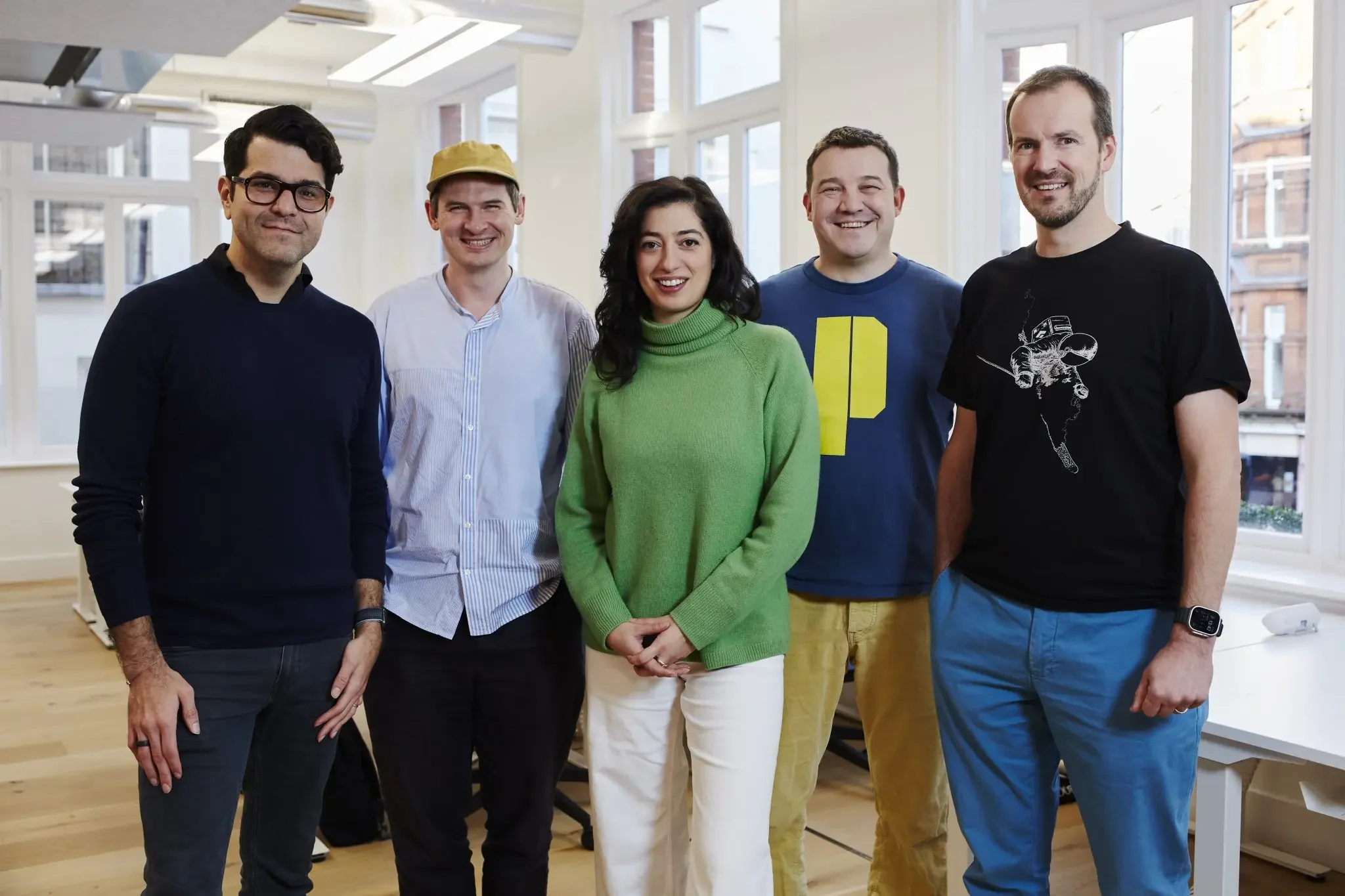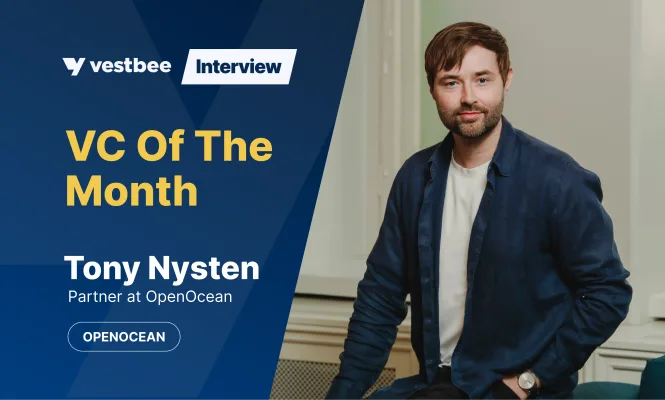

OpenOcean is a European early-stage VC investing in ambitious technology companies, with roots in the team behind MySQL. We invest primarily at seed, typically leading rounds with initial investments of €1–4 million. Our focus is on companies where data and technology can create a durable competitive advantage.
The portfolio includes companies such as Truecaller, IQM, Supermetrics, Booksy, Authologic and Minerva.
Fund strategy overview
Geography: Europe
Preferred industries: AI, data infrastructure, cybersecurity and software
Investment ticket: €1–4 million
Company stage: Pre-seed & seed
Product type: Primarily B2B software and deep tech
Product stage: Product in market or approaching commercial launch
Revenues: Flexible; from pre-revenue to early commercial traction
Q&A with Tony Nysten, Partner at OpenOcean
What are the 5 main things you look for in a startup?
I always like to start by thinking about the problem the startup is solving and whether it is a genuinely massive one. Secondly, the solution needs to be disruptive rather than incremental. Third is, inevitably, the founders: their ambition, ability to attract great people and capacity to evolve as the company grows
And finally, more specifically for OpenOcean, we have a long history in data infrastructure and tend to gravitate towards companies where data is an important part of both the business and its moat.
What disqualifies a startup as your potential investment target?
You’d think this would be easier to answer, since all VCs do is pass on companies all day, every day.
Beyond the obvious—small markets, poor economics or being outside our strategy—chemistry with the founders matters enormously. An investment can be a ten-year relationship, so there needs to be mutual trust and a shared vision for where the company is going.
What in your opinion differentiates the best founders from the rest?
The best founders combine seemingly contradictory qualities. They have charisma and the ability to build a big vision but an almost obsessive attention to detail. They have enough persistence to make the impossible possible, but enough flexibility to change direction when reality demands it.
Very few successful companies end up looking exactly like the founders imagined at the beginning. The best founders are able to reinvent both the company and themselves along the way.
What startups should take into account before making a deal with a VC fund?
Founder-VC relationships often last ten years or more—longer than many marriages and substantially more difficult to get out of. Founders should therefore DD their VCs just as seriously as VCs DD them.
Talk to founders from their portfolio, including companies where things didn’t go according to plan. Find out how the investor behaves when a company misses its numbers, needs another financing round or faces a genuinely difficult decision.
What is your approach to startup valuation and preferred share in the company?
We prefer to lead rounds and, as such, aim to secure a reasonably substantial ownership position that justifies taking an active role and, typically, a board seat. We have also taken co-lead and follower positions where we are more flexible on ownership.
How do you support your portfolio companies?
All VCs emphasise their network, board work and support with hiring, fundraising and strategy. That’s true for us as well.
But ultimately the founder is in the driver’s seat. A VC’s first responsibility is to avoid harming, be useful when needed and always pick up the phone. Sometimes the most valuable contribution is simply helping a founder think through a difficult decision.
What are the best-performing companies in your portfolio?
We have a number of great companies across the portfolio. Truecaller is one of the clearest success stories and became a publicly listed company in Stockholm. We’ve also listed IQM, which has grown into one of Europe’s leading quantum-computing companies, while Supermetrics has become a major global player in marketing intelligence and data.
We’ve also been quite active in CEE, including Poland, where the portfolio includes companies such as Booksy, Authologic and Minerva. Across the portfolio, we are looking for companies that have the potential to become global category leaders rather than simply strong regional businesses.
What are your notable lessons learned from investments that didn’t work out as expected?
A great product doesn’t automatically create a great company. Distribution, timing and the ability to build a commercial organisation matter just as much as technology.
Another lesson is that founders need to evolve with the company. Sometimes that means making the emotionally difficult decision to pivot despite years of sunk costs. Knowing when persistence has stopped being a virtue is an underrated founder skill.
What are the hottest markets you currently look at as VC and where do you see the biggest hype?
These change a lot! Lately we’ve spent time on data-intensive areas such as physical AI and cybersecurity, but also agent infrastructure, trust and even AI roll-ups.
AI is simultaneously the hottest market and the biggest source of hype. The interesting question for us is what remains defensible as models become better, cheaper and more widely available.
In your view, what are the key trends that will shape the European VC scene in the coming years?
Two broad transformations stand out. First, AI is fundamentally changing what knowledge work looks like, creating opportunities across both applications and the infrastructure behind them. Second, the current AI infrastructure stack—from compute and energy to data — is not scaling sustainably and will need to be reinvented.
Running through both is data sovereignty. Europe increasingly cares about where its data lives and who controls its critical technology infrastructure, creating a major opportunity for European entrepreneurs.